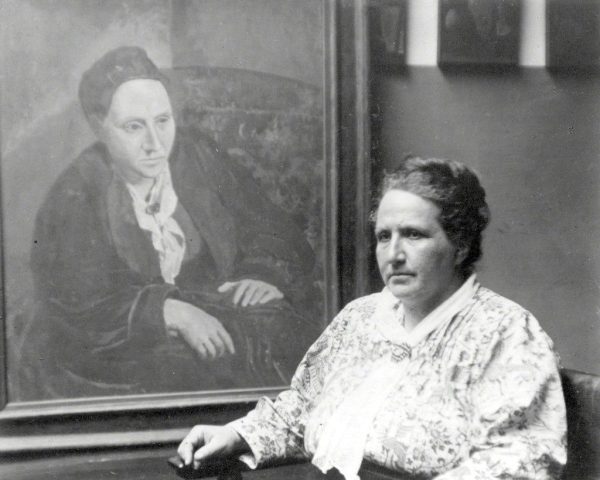
While reading Pablo Picasso’s autobiography, I found myself drawn not only to the artists of early twentieth-century Paris, but to the social structures surrounding them. One figure stood out in particular: Gertrude Stein, a modern salonnière or cultural host or curator as we would say today.
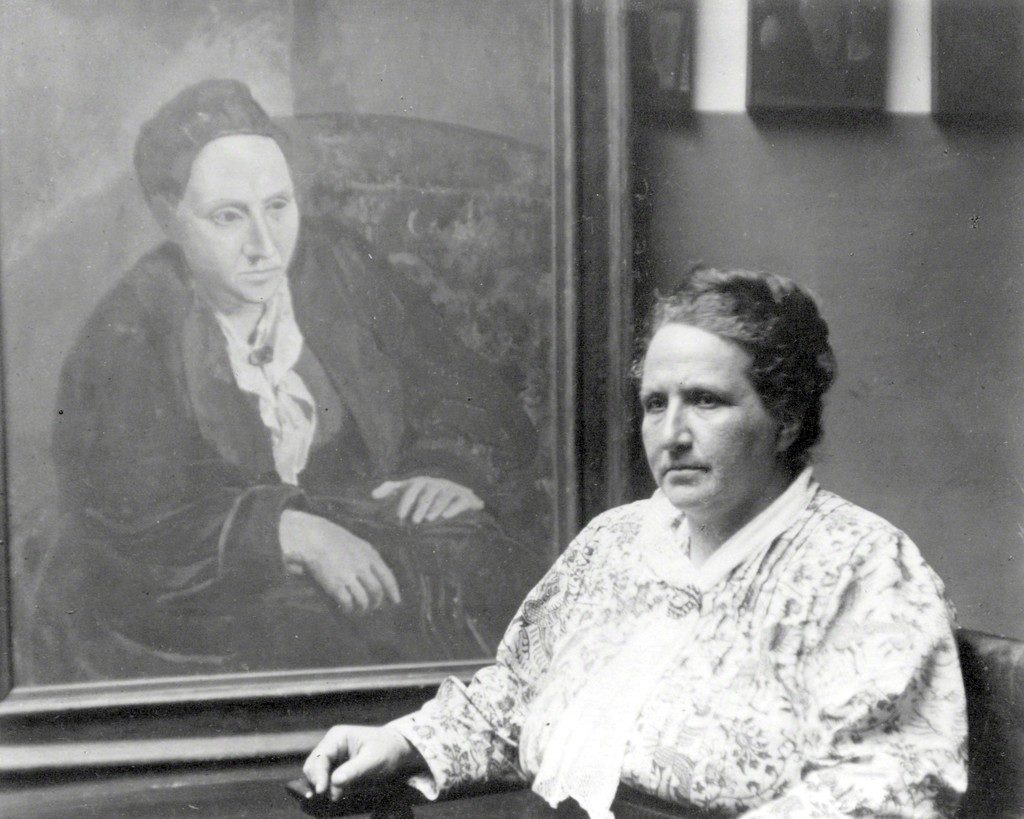
Her home became a gathering place for artists, writers, collectors and intellectuals. Picasso, Hemingway, Braque and Matisse were among those who passed through her salon and she acquitted very early on their art work. Picasso painted a portrait of her that was considered outrageous in its day (see below).. Like many salonnières before her, Stein was not simply hosting guests. She was curating conversations, connections and cultural exchange.
Reading about these gatherings, I was struck by how familiar they feel today.
Across cities worldwide, reading clubs, listening gatherings, supper clubs and curated discussion groups are flourishing. They are often described as emerging social formats, yet they resemble something much older. Perhaps because they respond to a challenge that feels surprisingly familiar.
The role of the historical salon was to provide access to ideas, networks and knowledge. Today, access is no longer the problem. We are surrounded by more information than we could ever consume leading to any kinds of fatigue (digital, content, products, information at large).
What has become scarce is context and human interpretation. Philosophy is booming now, maybe what we crave most is someone helping us to make sense of todays’ craziness.
This helps explain why community is increasingly becoming a form of cultural curation. Looking into it, a reading club is not really about books, or a listening session is not really about music. Running clubs are not just about fitness. Supper clubs do not solely offer a dining experience.
The content provides a reason to come together, but the real value lies elsewhere: in conversation, shared interpretation and a sense of belonging. The resurgence of these formats suggests that community is evolving into something more than a social need. It is becoming a filtering mechanism to navigate complexity.
In this sense, the return of Le Salon is not about Nostalgia or New-stalgia but discovering an old social technology for a new cultural condition.